Utah winters are beautiful, but they can be tough on your home. Heavy snowfall, freezing temperatures, and shifting weather patterns create the perfect conditions for one of the most damaging winter roofing issues: ice dams. Ice dams are not just an inconvenience. They can lead to roof damage, interior leaks, and expensive repairs if they are not prevented the right way.
Understanding why ice dams form and how to prevent them is the key to protecting your roof, attic, and home. At Master Roofing Company, we help Utah homeowners prevent ice dams through professional roof inspections, attic insulation services, and ventilation solutions that support Utah building code requirements.
What Is an Ice Dam?
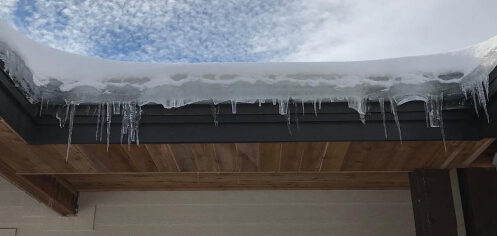
An ice dam forms when snow on your roof melts and then refreezes near the eaves. As that refrozen ice builds up, it creates a barrier that blocks additional melting snow from draining off the roof. The trapped water backs up under the shingles and can leak into your home.
Ice dams are more than a surface issue. Over time, they can damage shingles, loosen protective underlayment, rot roof decking, stain ceilings, and contribute to mold and moisture problems inside the attic.
The Number One Cause of Ice Dams: Improper Ventilation
The number one reason ice dams happen is improper attic ventilation.
Heat rises from inside your home and can escape into the attic if your ventilation and insulation are not working correctly. That heat warms the roof deck over the living areas and melts snow on the roof. The melted water then runs down toward the eaves. Because the eaves extend past the exterior walls, they are colder and exposed to outside air. When the water reaches those colder areas, it refreezes.
This freezing and refreezing creates a ridge of ice that can climb back up the roof slope. Once ice pushes up under the shingles, water can follow and enter your roof system.
Proper ventilation helps prevent this cycle by keeping the underside of the roof sheathing at a more even temperature. Balanced airflow brings in outside air at the eaves, moves it along the underside of the roof, and exhausts it near the ridges. This helps reduce uneven roof warming so snow does not melt in patches and refreeze at the edges.
How Proper Ventilation Prevents Ice Dams
A balanced ventilation system is designed to keep air moving through your attic space.
- Intake vents at the eaves pull in cold, outside air.
- Air moves along the underside of the roof sheathing.
- Exhaust vents near the top of the roof (often ridge vents) allow warm air to exit.
When ventilation is done correctly, the roof deck stays closer to the outdoor temperature. That means snow is less likely to melt unevenly, and less likely to refreeze at the eaves into an ice dam.
How to Tell If Your Ventilation Is Not Balanced
One of the simplest ways to spot ventilation issues is to watch how snow, frost, and ice melt off your roof.
If snow melts unevenly, especially if it melts faster above living spaces but stays frozen near the edges, that can indicate your roof deck is warming in some areas more than others. That is a sign your ventilation may not be balanced and you may be at higher risk for ice dams.
- Snow melts in patches instead of evenly.
- You see heavy icicles or ice buildup along the eaves.
- You notice frequent freezing near gutters and roof edges.
- Your attic shows signs of moisture or frost in winter.
These symptoms are worth taking seriously because they often point to airflow problems that can lead to ice dams and long-term roof wear.
Why Attic Insulation Still Matters
Ventilation is the biggest factor, but attic insulation plays a major supporting role. Insulation helps keep warm air inside your home rather than leaking into the attic. When insulation is low, uneven, or poorly installed, your attic warms up faster and your roof deck can heat up, which increases snow melt.
Strong insulation helps your ventilation system do its job by reducing heat loss. It can also improve comfort and energy efficiency year-round.
- Helps reduce heat loss from the living space into the attic
- Supports more consistent attic temperatures
- Can improve energy efficiency and lower heating costs
- Reduces the conditions that lead to uneven snow melt
Ice and Water Shield at the Eaves: Code Matters in Utah
Ice and water shield at the eaves is required by building code in Utah because it helps protect the roof deck from water intrusion when ice dams happen. This waterproof membrane is designed to provide extra protection in the most vulnerable areas of the roof.
Unfortunately, ice and water shield is often not installed per building code requirements. This can happen when contractors do not know the codes, or when contractors choose to ignore the codes to sell roofs at a cheaper price.
If ice and water shield is missing or installed incorrectly, the risk of major damage increases. Severe ice dams can tear shingles and ice shield off the roof and cause large and expensive leaks.
Why Ice Dams Can Get Expensive Fast
Ice dams are not just a winter nuisance. They can create structural and interior damage that is costly to repair. When water backs up under shingles, it can soak roof decking, insulation, and even interior drywall.
- Shingles can lift, tear, or break
- Roof decking can weaken from moisture exposure
- Leaks can damage ceilings, walls, and insulation
- Moisture can contribute to mold and attic damage
In many cases, homeowners only notice the issue after water stains or leaks appear inside the home, and by that point the damage is already underway.
How Roof Inspections Help Prevent Ice Dams
A professional roof inspection is one of the best ways to reduce the risk of ice dams before winter hits. A thorough inspection can reveal ventilation issues, insulation gaps, and problems with materials or installation that make ice dams more likely.
- Identify ventilation imbalance (intake vs exhaust)
- Spot insulation deficiencies that allow heat loss
- Check for blocked vents and airflow restrictions
- Confirm ice and water shield presence and placement at eaves
- Catch early roof damage before winter makes it worse
Master Roofing Company provides roof inspections and attic-related guidance to help Utah homeowners prepare for winter and avoid preventable leaks.
Get Ahead of Ice Dams Before the First Snowfall
Preventing ice dams is all about stopping the melt-and-refreeze cycle. In Utah, the best prevention plan includes balanced attic ventilation, strong attic insulation, and code-compliant protection at the eaves.
If you have seen uneven snow melt, heavy icicles, or past winter leaks, it is worth scheduling a roof inspection. Fixing ventilation and insulation issues now can help protect your roof and your home all winter long.