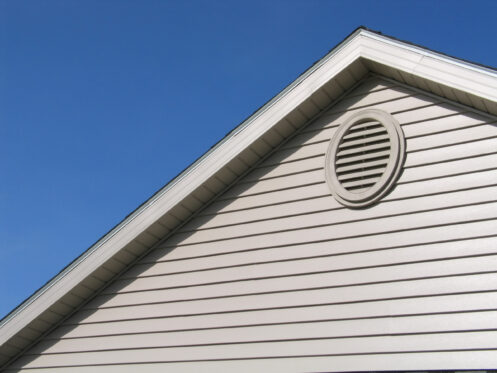
If you’ve ever walked upstairs and noticed a room that feels warmer than the rest, your attic could be the reason why. What many homeowners don’t realize is that attic ventilation plays a big role in not only home comfort, but the long-term health of your roof.
Our team specializes in attic ventilation because we know how much damage improper airflow can do. From warped shingles to moisture issues and ice dams, a poorly ventilated attic can quietly create issues for your home.
Why Attic Ventilation Is So Important
In the summer, heat from the sun beats down on your roof all day. Shingles are designed to reflect heat from above, but they’re not made to handle heat rising up from below. If your attic traps hot air and has no way to breathe, that heat radiates upward, effectively cooking your roof from the inside out.
Proper attic ventilation allows your attic to cycle in cooler air from outside and push hot air out. When that balance is off, things can get too hot too fast.
How Hot Is Too Hot?
Ideally, your attic should be within 20 to 30 degrees of the outdoor temperature. But in most homes we inspect, attic temperatures are significantly higher, especially in the summer.
That kind of heat doesn’t just make the upstairs feel uncomfortable. It also puts stress on your roofing materials, dries out your underlayment, and shortens the life of your shingles.
The Hidden Cost of a Hot Attic
When your attic is overheated, you might notice:
- One or more rooms feeling consistently warmer
- Unexplained wear and tear on your shingles
- Higher-than-expected energy bills
- Warped roof decking or bubbling paint in your ceiling
These are all signs that your attic isn’t ventilated the way it should be. And if left alone, the damage can build up over time, turning what could have been a simple fix into a major (and expensive) roofing project.
It’s Not Just About Heat — Moisture Matters Too
Attic ventilation is just as important in the winter as it is in the summer. During colder months, warm air from inside your home can seep into the attic. Newer, well-sealed homes are especially prone to trapping moisture.
That trapped humidity has nowhere to go, and over time, it can lead to:
- Mold or mildew on the rafters
- Rotting wood and structural damage
- Condensation on nails, leading to rust
And when it snows? That warm attic air can cause the snow on your roof to melt and refreeze at the edges. This leads to ice dams, which are notorious for pushing water back up under your shingles and into your home.
Most Roofs Fail the Ventilation Test
Here’s the truth: about 95 percent of the roofs we inspect aren’t ventilated to code. And that includes homes with brand new roofs.
Why? Because not all roofing contractors understand or prioritize proper ventilation. It’s one of those behind-the-scenes details that doesn’t always get the attention it deserves. Unfortunately, skipping it can cost homeowners big in the long run.
Does Your Roof Warranty Still Count?
Think your roof is protected because it came with a warranty? Not necessarily.
Most roofing warranties are only valid if your attic is ventilated properly. If there’s not enough intake or exhaust airflow, manufacturers can void the warranty, even if your shingles are brand new.
That’s why we always make ventilation a priority. It protects not just your home, but the investment you’ve already made in your roof.
What Proper Ventilation Looks Like
A balanced attic ventilation system has two key components:
- Intake vents: Usually located at the soffits or lower edges of the roof, these bring in fresh, cooler air from outside.
- Exhaust vents: Located near the roof’s peak, these allow hot, stale air to escape.
If your attic has exhaust vents but no intake vents, or if the intake vents are blocked or undersized, the system won’t function properly. Hot air will just sit there, and moisture will linger.
We often find that the intake side is the weak link. That’s the part most homeowners (and even some contractors) overlook.
How to Know If Your Attic Needs Attention
Some signs of poor ventilation are subtle. Others are more obvious. If you’re noticing any of these, it’s worth having your attic checked out:
- Hot or stuffy rooms upstairs
- Peeling paint or water stains on ceilings
- Mold or moisture in the attic
- Ice dams forming along the roof edge
- Roof shingles that curl, buckle, or wear out too quickly
Even if you don’t have visible damage yet, catching these problems early can save you a lot of money and stress down the road.
We Don’t Guess — We Test
At Master Roofing, our roofing services experts take the guesswork out of attic ventilation. Our team uses tools like thermal cameras, airflow meters, and moisture sensors to get a complete picture of how your attic is performing. We’ll walk you through what’s working, what’s not, and how to bring your system up to code.
Schedule an Attic Evaluation With Master Roofing
Your attic may be out of sight, but it shouldn’t be out of mind. If it’s not ventilated properly, you could be shortening the life of your roof and wasting money on preventable repairs.
Let us take a closer look and help you protect what’s overhead.